Final Home
VERTICAL AI FOR OUTCOMES

Purpose-built Prescriptive AI for every Plant Reliability outcome.

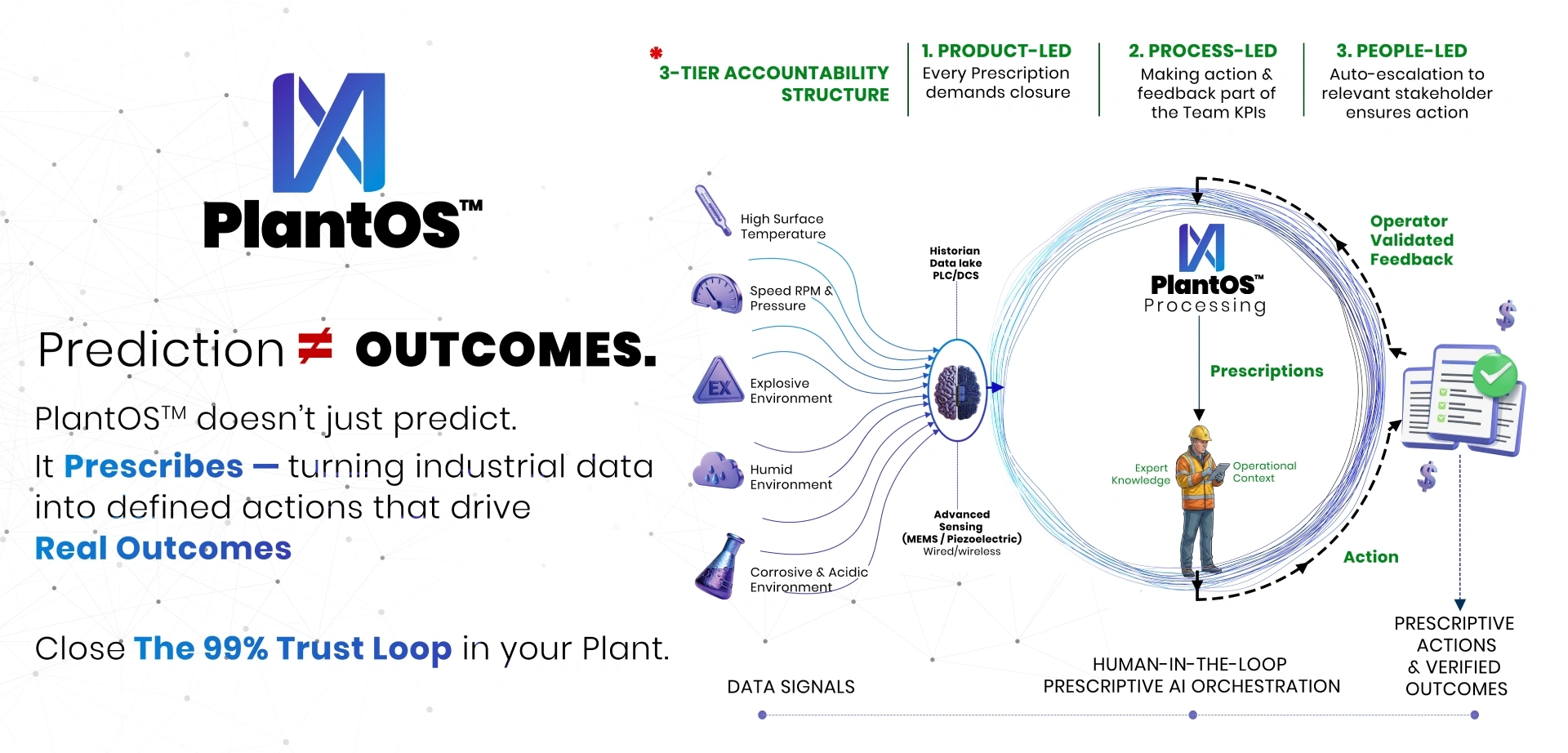
PlantOS™ tells your operators exactly what to fix before it breaks. And validate.

Prediction Outcomes.

Continuous Feedback Loop Prescription Action Full Plant Coverage 01 02 03 Sensors Equipment Data Oil Analysis Inspection Data PLC / Historian Process Data Rx OPERATOR Validates the Prescription EQUIPMENT Being fixed — in time Uptime Throughput Cost / Ton Validated Outcomes

946

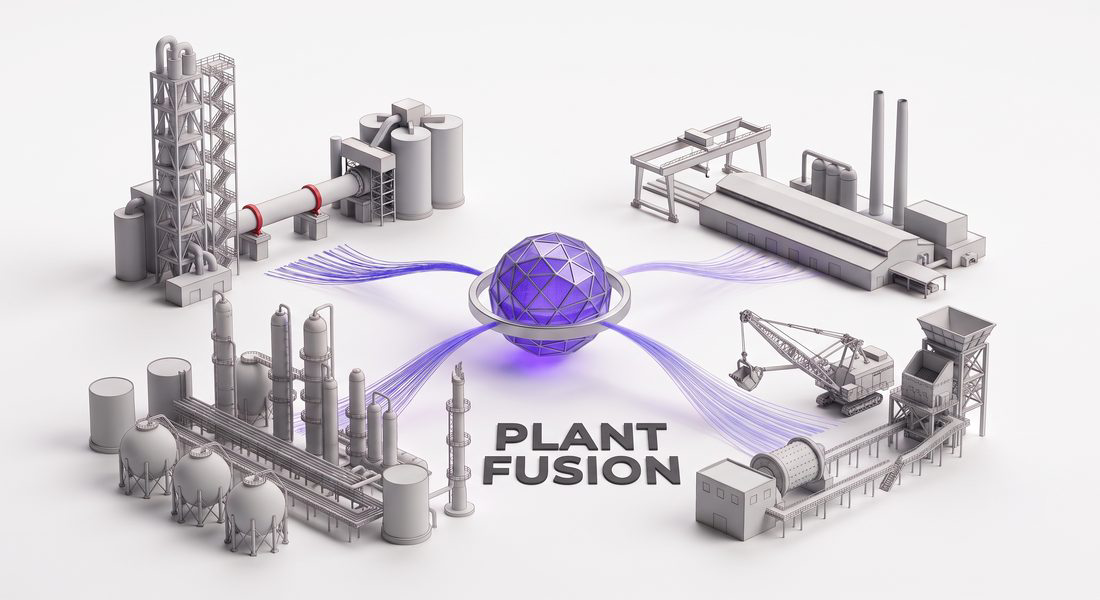
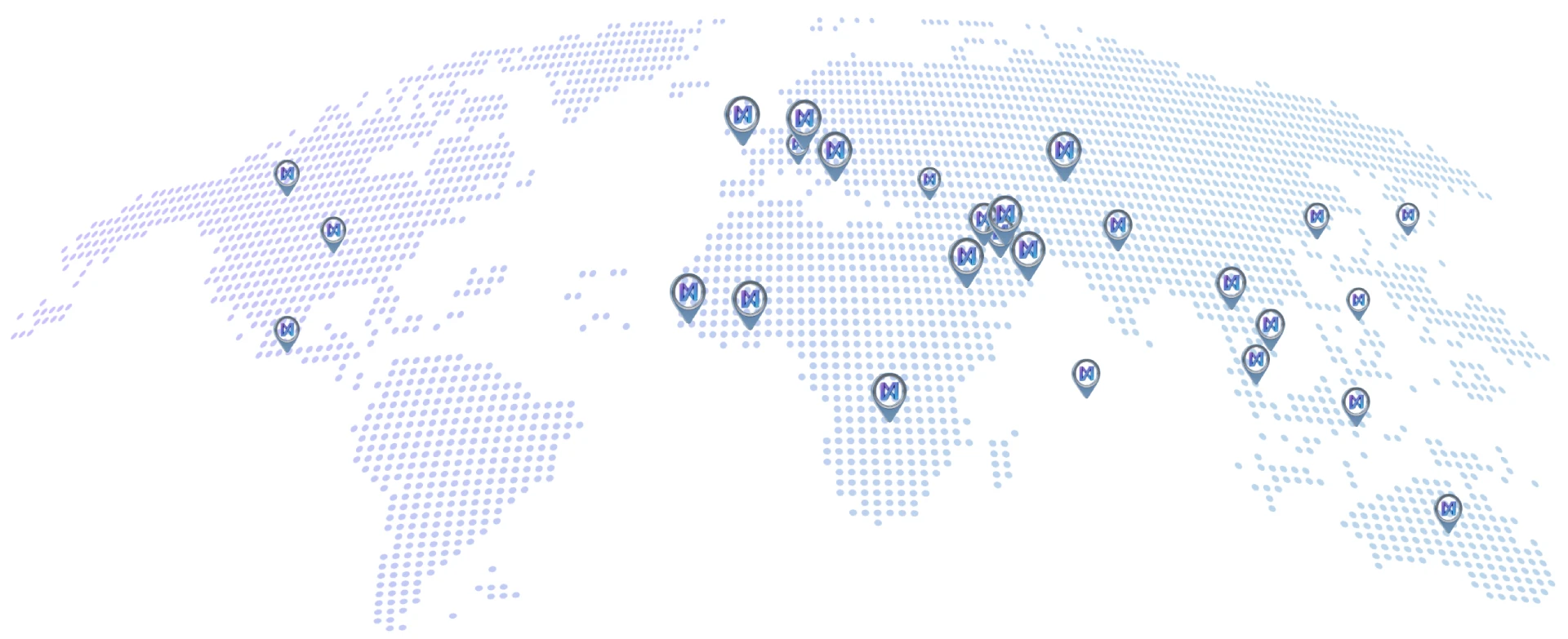
Plants Digitalized
Globally

157,115

Hrs. of Unplanned Downtime Saved

up to

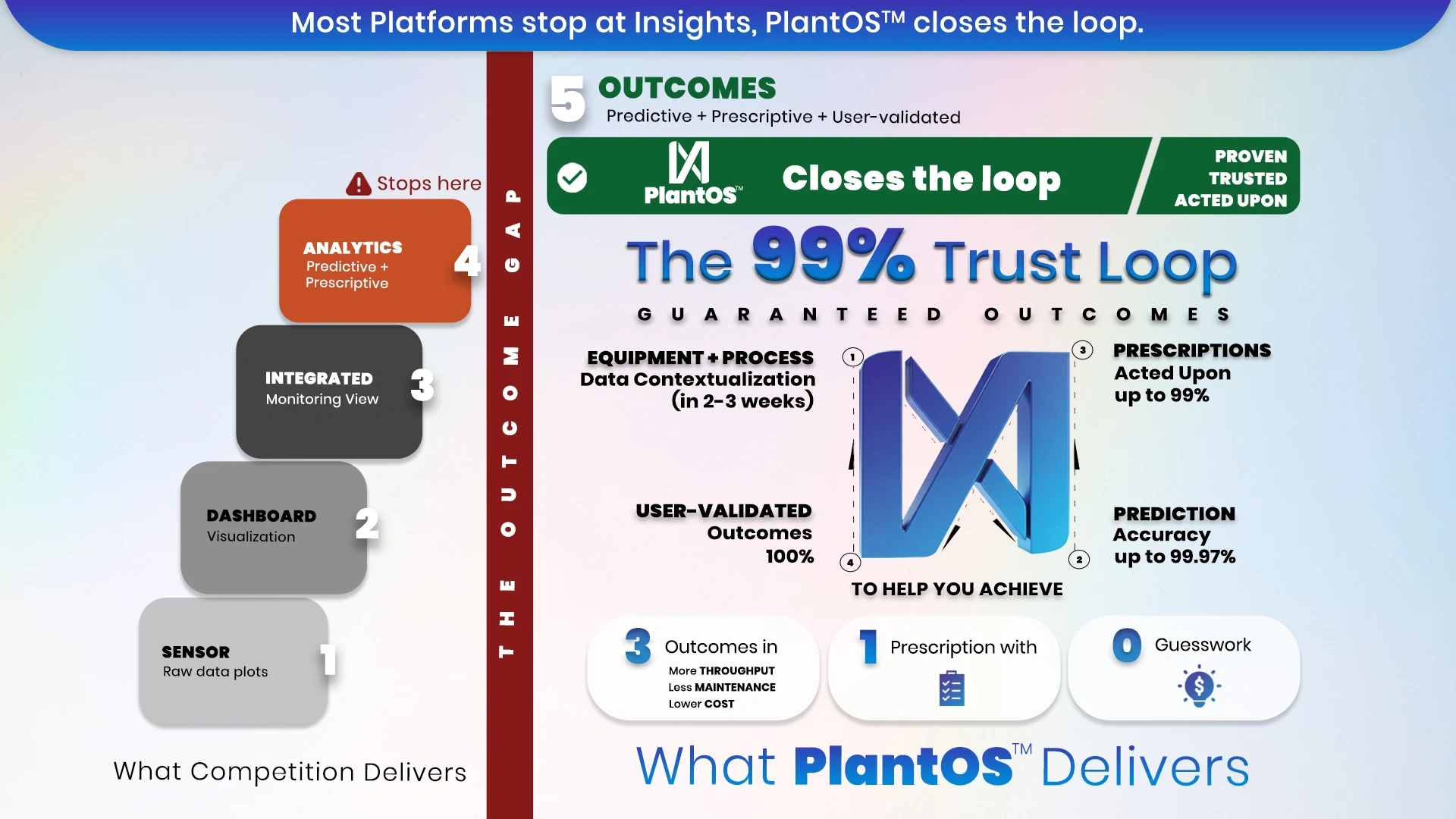
99%

Prescriptions Acted
Upon

up to

10%

Less Maintenance Cost

up to

2%

Less Conversion Cost

up to

2.5%

More Throughput

*Note – Date as of June 03, 2026  Source – PlantOS™ Digital Reporting System – User-validated True Positives & False Negative Rate

PlantOS™ is Infinite Uptime's prescriptive AI platform for heavy manufacturing, delivered as Production Outcomes as a Service. Where predictive tools warn that equipment may fail, PlantOS™ tells operators which fault to fix, why, and by when. Operators validate whether the prescription worked, and that feedback sharpens the next one. It turns equipment and process data into validated production outcomes: less unplanned downtime, lower maintenance cost, and higher throughput.

01
🛡️

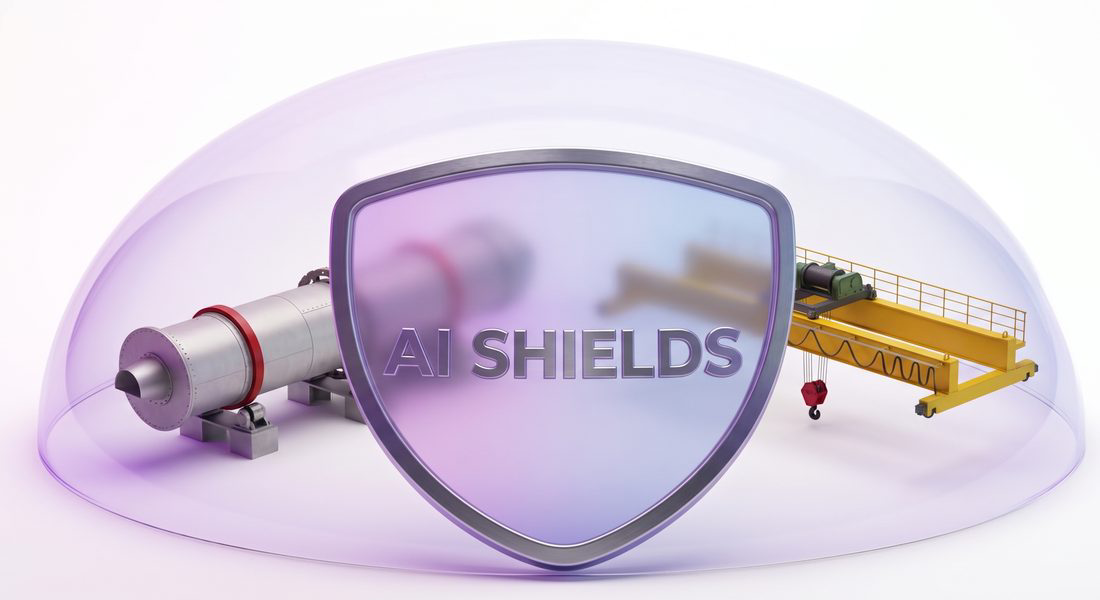
AI Shields

Flagship · Mechanical × Process

Equipment-specific deep domain AI that catches the faults a generic model can't — where process conditions induce and accelerate mechanical failure.

Built for
Kilns · Mills · Cranes · Furnaces · Mixers · Extruders · Dryers & more.
Detects
Thermal fatigue · Material build-up · Cyclone jamming · Oil contamination · Gear-mesh backlash & more.
Method
Dynamic FMEA
02

Critical Equipment Reliability

Across 9 Verticals
High surface temp (150 °C) · Ultra-slow speed (2 RPM) · Harsh environments
Learn More
03

Standard Equipment Reliability

Across 9 Verticals
Flexible deployment · Fast install
Learn More
04

Non-Critical Equipment Monitoring

Across 9 Verticals · Balance of Plant Equipment
Self-Powered Wireless Sensors · Quick-install · No gateways
Learn More
Client Testimonials

Our Customers Speak

Where Predictive AI Stops

What is the difference between equipment
failure and process-induced failure?

Equipment-Borne

Degradation from the inside

Mechanical faults that develop within the equipment itself over time.

20+ specific modes
Bearing wear
Unbalance
Misalignment
Looseness
Cavitation
Resonance
Lubrication degradation
Gear-mesh anomalies

The PlantOS™ Difference

Generic AI stops at the mechanical signature.

Vertical AI contextualizes both — improving prediction coverage, accuracy, and explainability.

Process-Induced

Stress from the outside

Operating conditions that accelerate equipment degradation.

20+ specific modes
Kiln ring formation
Thermal overstress
Cyclone coating buildup
Ladle heat profile drift
Hot-strip thermal fatigue
Wet-end web tension drift
Coupling thermal loads
Roll thermal overload
The Core Engine

The 99% Trust Loop

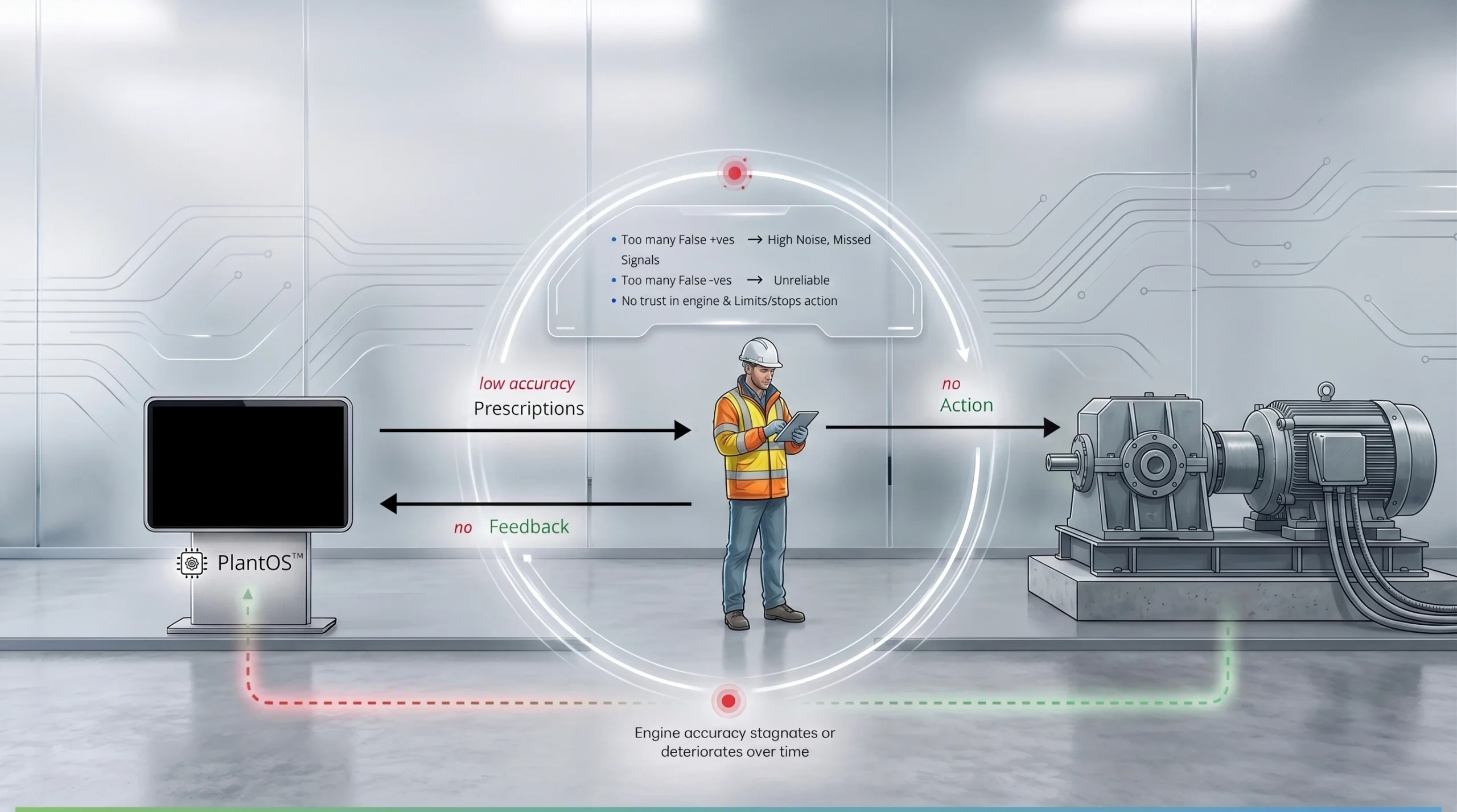
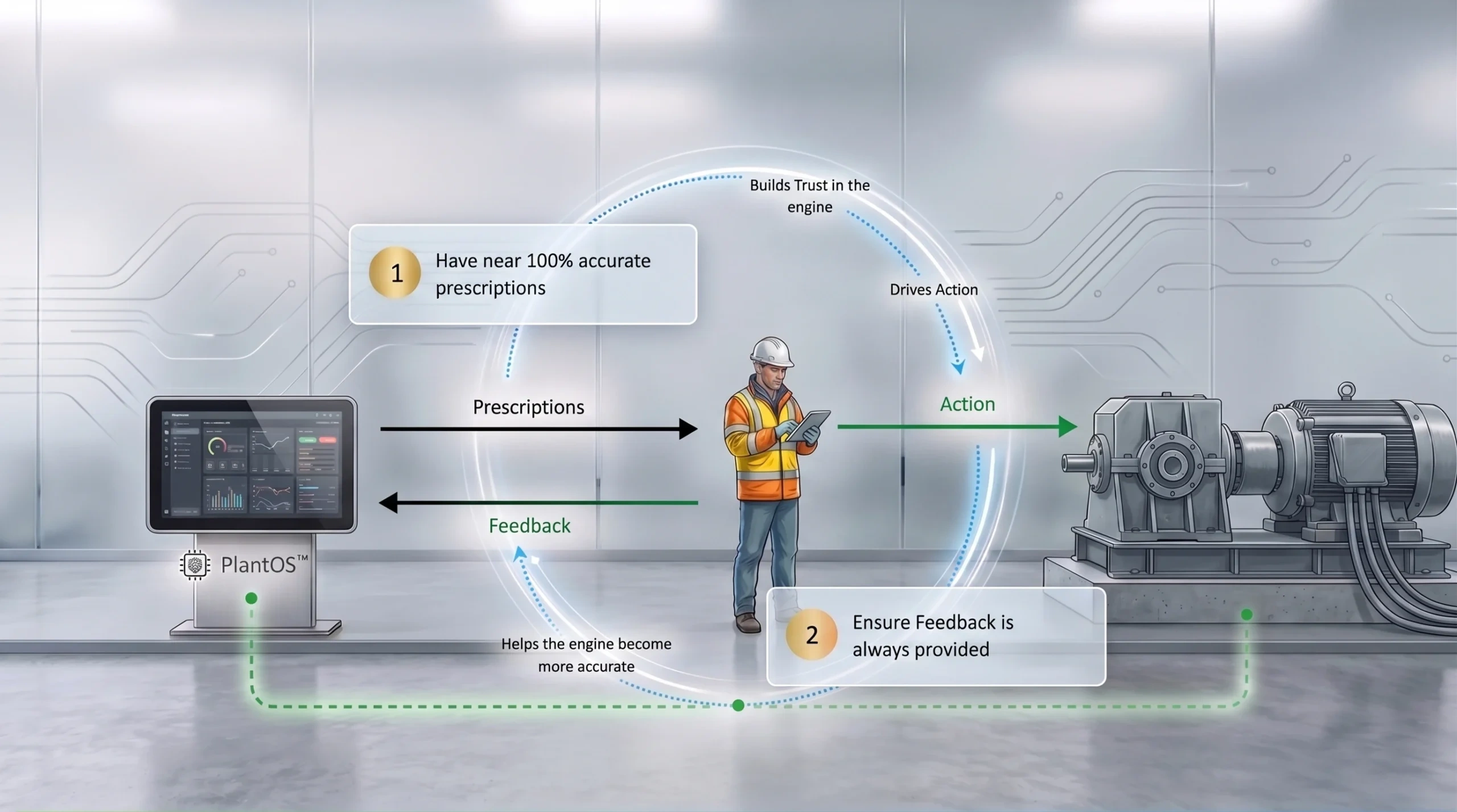
99% Trust Loop — animated data flow cycle Six nodes in a horizontal loop: Accuracy, Trust, Action, Feedback, Tagged Data, Better Models — connected by animated flowing arrows showing how each loop makes the next prescription sharper. Accuracy Model output Trust Operator belief Action Work order taken Feedback Outcome captured Tagged data Labelled signal Better models ↻ feeds back

Each loop makes the next prescription sharper.

The Trust Loop is how PlantOS™ keeps improving. Accurate prescriptions earn operator trust. Trust drives action on the plant floor. Each action produces a validated outcome, and that feedback trains better models. Better models raise accuracy again. Every turn of the loop makes the next prescription sharper and the whole system more trustworthy over time.

01 · THE FLYWHEEL
The Paradox That Slows AI Adoption
01 / 04
IMPLEMENTATION

How long does it take to
deploy PlantOS™Prescriptive AI?

The Path to Reliability Outcomes Your Operators Trust - in 90 Days

No rip-and-replace — works with your existing systems. First prescription in 2 weeks.
Scale with confidence.

Week 1-2

Solution Deployment

  • 100% equipment coverage Day 1
  • Rotating + static equipment + process context
  • Baseline assessment complete

Week 3-4

First Prescription

  • Operator validation workshop
  • Digital signoff trained
  • First fault prescribed

Month 2

Scale & Optimize

  • Additional equipment lines
  • Process efficiency modules
  • KPI baseline established

Month 3

Plant-Wide

  • Board-ready ROI report
  • Expansion planning
  • 99% Trust Loop complete

Ready to see your first prescription?

Book a discovery call. We'll model your specific equipment risk and ROI before you commit.

Try PlantOS™
Customer Proof

Operator Validated Outcomes

Validated on site and signed off by the operators who run the plant.

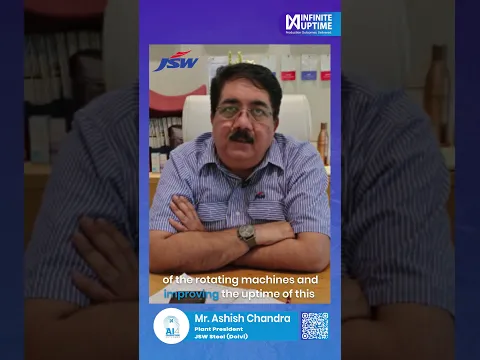
JSW Steel Logo India & USA
  • 36,108 hours of downtime eliminated · 139 plants

JSW Steel rolled PlantOS™ out across 139 plants in India and the USA to cut unplanned downtime 2x in less than a year.

Mr. Alec Glenn, Vice President of Reliability, JSW Steel

Indorama Logo USA & APAC
  • 99.46% prediction accuracy · 14 plants

Across 14 plants, Indorama Ventures uses PlantOS™ to predict equipment faults before they cause failures.

Mr. Rajneesh Ojha, Fibres Global MTC Lead, Indorama ventures

Tire Manufacturing Read the JK Tornel story
JK Tornel Logo Mexico
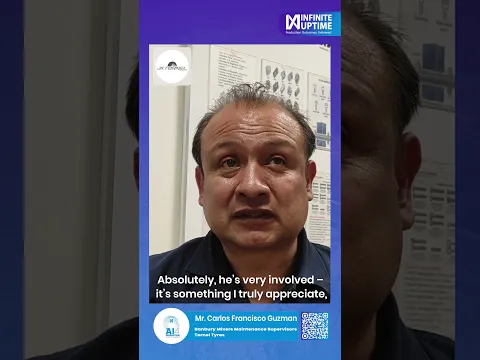
  • $46,245 annual maintenance savings · 100% prediction accuracy

On its Banbury mixer line in Mexico, JK Tornel used PlantOS™ vibration alerts to act early and avoid major breakdowns.

Mr. Carlos Guzman, Banbury Mixers Area Maintenance Supervisor, JK Tornel

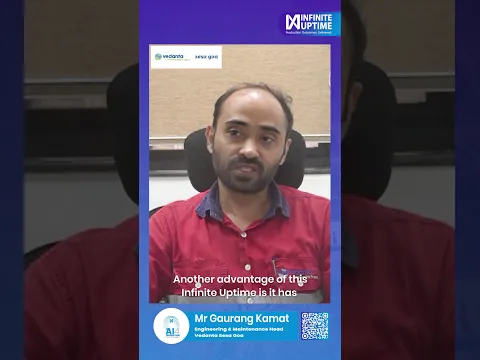
Vedanta Logo India
  • 3X ROI in under 12 months

At Sesa Goa, Vedanta Group used PlantOS™ to catch issues early and pay back its investment inside a year.

Mr. Gaurang Kamat, Head Engineering, Sesa Goa, Vedanta Group, India

SPCC Logo Saudi Arabia
  • 9X ROI in under 6 months

SPCC replaced reactive firefighting with a daily prioritized work orders from PlantOS™, recovering its investment in months.

Mr. Alaa Farrag, Maintenance Manager, SPCC

Coromandel International Logo India
  • 3,210 hours of downtime eliminated · 27 plants

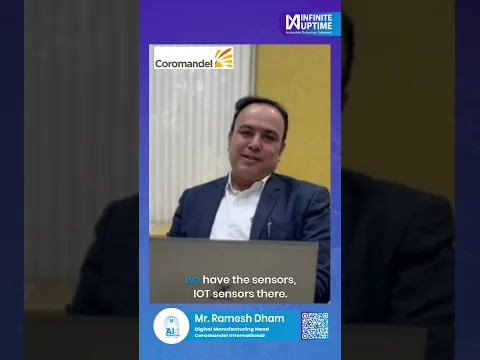
Across 27 plants, Coromandel International uses PlantOS™ real-time alerts to plan maintenance and avoid surprise breakdowns.

Mr. Ramesh Dham, Digital Manufacturing Head, Coromandel International

VERTICAL AI FOR OUTCOMES

Frequently Asked Questions

Explore common questions about PlantOS™, Prescriptive AI, equipment reliability, and operator-validated outcomes. Learn how Vertical AI helps heavy manufacturers prevent downtime and improve production performance.

01 What is prescriptive maintenance?

Prescriptive maintenance is the step beyond predictive maintenance. Instead of only forecasting that a machine / equipment may fail, it tells the maintenance team exactly which fault to act on, why it is happening, and what to do about it. PlantOS™ delivers this as a specific, validated instruction in a work-order prescription that an operator can act on immediately.

02 How is prescriptive maintenance different from predictive maintenance?

Predictive maintenance warns that equipment is likely to fail and roughly when. Prescriptive maintenance goes further and prescribes the exact corrective action, ranked by urgency and impact. PlantOS™ also captures whether each fix worked, so its recommendations become more accurate over time.

03 What is PlantOS™?

PlantOS™ is Infinite Uptime's prescriptive AI platform for heavy manufacturing, delivered as Production Outcomes as a Service. It reads both mechanical fault signatures and process-induced fault signatures to detect anomalies early, then issues clear prescriptions that tell operators what to fix, why, and by when. It is deployed across 946 plants in 26 countries.

04 Which industries does Infinite Uptime serve?

Infinite Uptime works across heavy manufacturing, including steel, cement, mining, paper and pulp, chemicals and fertiliser, tyre and rubber, food and beverage, pharmaceuticals, and energy and oil and gas. Its Prescriptive AI is tuned to the specific failure modes of each industry's critical equipment, standard rotating equipment, and balance of plant equipment – thus ensuring full plant coverage.

05 How quickly does PlantOS™ deliver results?

Most sites receive their first prescription within about two weeks of installation. Full validated outcomes, such as measurable reductions in unplanned downtime, typically follow within the first two to three months as the system learns each plant's equipment and process conditions.

06 How does PlantOS™ avoid false alarms?

Every prescription is validated by the operators who act on it. That sign-off confirms whether the recommended fix was correct, and the feedback trains the models to be more accurate. The result is a high rate of user-validated true positives rather than generic alerts.

07 What return on investment (ROI) do customers see?

Customers use PlantOS™ to reduce unplanned downtime, lower maintenance cost by up to 10 percent, and raise throughput by up to 2.5 percent. Because a single prevented outage can offset the cost of the platform, most deployments pay for themselves early.